
TIMES OF ISRAEL
by Avi Issacharoff
August 3, 2014
Its popularity waning, the terror group is faced with a choice: perpetrate a large attack or slide into a long-term ceasefire
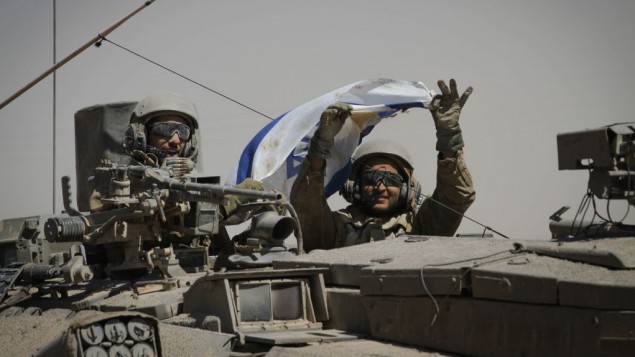
The IDF will most likely complete its redeployment along the Gaza border Sunday, after concluding the process of neutralizing the Hamas tunnels extending toward Israel. The IDF will not withdraw entirely from Gaza, but it will leave the populated areas and keep troops deployed in a narrow area inside the Palestinian territory. This decision gives Hamas a certain legitimacy in the eyes of the Palestinian public to continue attacking the Israeli troops. But eventually, the IDF will pull out of those areas as well and then the organization will face a difficult dilemma – what should it do now?
On the one hand, the Gazan public is pressing Hamas more every day to hold its fire. The destruction in the Gaza Strip is unprecedented. This refers not only to the 1,700 Palestinians killed (including hundreds of gunmen) and more than 9,000 injured, but also to the inconceivable damage: the thousands of homes destroyed, the power cuts, the dearth of drinkable tap water, the hundreds of thousands of displaced. All these have made Gaza a place of great distress, desperate for a few days of quiet and rehabilitation. Therefore, an IDF withdrawal from the entire Gaza Strip will harm Hamas’s legitimacy in the eyes of the Gazan public to continue the rocket fire and attacks. It’s possible the organization will be satisfied, in such a case, with firing a few rockets and releasing victory statements, and to transition bit by bit into an undeclared long-term ceasefire.
On the other hand, a total cessation of fighting at this stage without having achieved an agreement that includes the lifting of the blockade on the Strip would be perceived as a defeat for Hamas. At the start of the operation, the organization’s military wing presented six demands for a ceasefire: the release of the prisoners freed during the 2011 swap for IDF soldier Gilad Shalit and recently rearrested in the West Bank, the establishment of a port, the expansion the fishing zone, opening the Rafah crossing into Egypt, opening the crossings into Israel, and the payment of Hamas salaries. Slowly, the demands eased, and the head of Hamas’s military wing, Mohammed Deif, said last week that the organization wouldn’t agree to a ceasefire unless “the aggression ceases and the blockade is lifted.” These two demands are vague, but it was interesting to note that Deif didn’t mention the prisoner releases or the establishment of a port. And if this round of hostilities concludes without Israel or Egypt agreeing to accept even one of the organization’s demands, Hamas will be humiliated…..
http://www.timesofisrael.com/as-israel-withdraws-troops-from-gaza-a-dilemma-for-hamas/
 ArchitectGuy on Israel