
FRONT PAGE MAG
by Janet Tassel
May 29, 2014
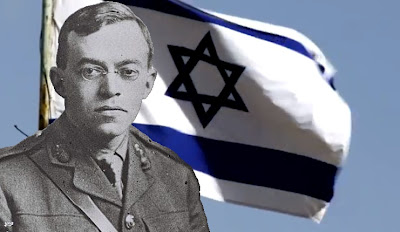
Amazingly, the last biography of Vladimir Jabotinsky in English appeared close to twenty years ago: Lone Wolf, a two-volume doorstop by Shmuel Katz (1996), which at almost 2,000 pages, deserves its reputation as “compendious.” Now, in a new biography, Jabotinsky: A Life, Hillel Halkin has done the impossible: He has gracefully condensed the story of this complex tragic figure into a page-turner that is at once concise and a rattling good read.
Jabotinsky, known principally as Zionism’s most polarizing and bellicose crusader, was also a cultured, indeed aristocratic, polymath— multingual,a prolific journalist, lawyer, translator of Poe and Dante, playwright, poet, playwright and author…….Born there in 1880, he left for the bohemian life abroad when he was only 17, and “said a last goodbye to it before World War I,” but “a part of him always remained there,” this intoxicating, cosmopolitan city where he studied, worked as a young journalist, and played the rascal as a boy.
……Then, on April 6, 1903, came the infamous Kishinev pogrom, inspiring Chaim Bialik’s great Hebrew poem, “In the City of Slaughter,” which Jabotinsky translated into Russian, reaching a larger audience than Bialik’s original. What both Bialik and Jabotinsky took away from this massacre above all was the indignity of Jewish fear, passivity, and cowardice, the shame of Jewish men hiding under beds while their women were raped and killed.
After Kishinev, Jabotinsky began crusading for the establishment of a Jewish self-defense force, and immediately threw himself into the effort. Jabotinsky’s “belief in Jewish activism in Russia no less than in Palestine,” the call for Jews “to take their destiny into their own hands,” marked his formal conversion to militant Zionism.
 ArchitectGuy on Israel