
AMERICAN CENTER FOR DEMOCRACY
by Sol Sanders
July 7, 2014
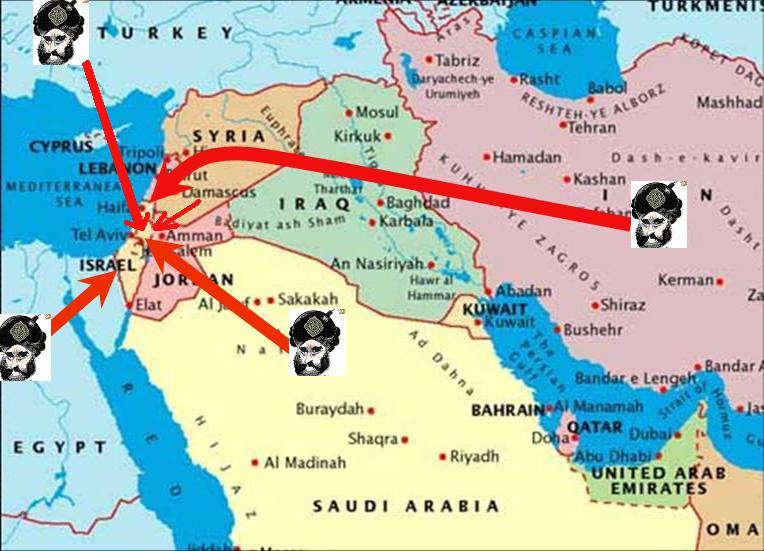
Events are drawing Israel into a major war with neighboring Arab terrorist organizations to result in another total reordering of Mideast relationships.
Comparison of the current scene with the eve of the Six Day War in 1967 is almost unavoidable. Then, too, a reluctant Israel waged a preemptive action because of what it saw as an existential threat from an alliance of Arab neighbors. As great as the possibility for another complete regional re-dispositioning is, the outcome of events is even more unpredictable than it was in 1967. Today’s situation is vastly different:
First, Egypt, the largest and traditionally the leading Arab state, will not be the tripwire which brought on Israel’s preemptive strike then. This time Cairo could well be a benevolent neutral if not an ally in any new encounter between Israel and its principle enemy, the radical Arab Islamists. Cairo’s military junta is waging a ruthless campaign against the jihadists, voted into power but which it dislodged with considerable popular support.
Second, the prospect of a intervention by the Soviet Union is missing — and a clash of the, then, two superpowers — which hung over the earlier events. Russian President Vladimir Putin’s nuclear arsenal notwithstanding, his ability to influence events in the region with conventional military forces and aid is marginal. In part, that is because his imbroglio in Ukraine – having produced early victories – is now turning into a Russian disaster.
Third, the ambivalent position of the Obama Administration despite all its public protestations of loyalty to a U.S. ally, is a sharp contrast to President Lyndon Johnson’s profound pro-Israel sympathies at a time when the U.S. Left had not made a bogus Palestinian crusade a central issue.
And, fourth, there is a new aggressive and potentially nuclear-armed Iran, dedicated to the destruction of Israel, mobilizing long suppressed Shia minorities throughout the region in a Muslim sectarian conflict. Tehran’s mullahs have been able to bridge the historic Arab-Persian divide to bolster Arab Shia and even non-Shia allies.
……Assuming the Israeli military superiority, including the tacit endorsement of Cairo and the Gulf states to action against the jihadists, a new perspective would unroll in the Mideast. But given the incredible complex of cross-currents (as in 196&) the outcome is totally unpredictable.
READ MORE
 ArchitectGuy on Israel