TIMES OF ISRAEL
by Abraham Rabinovich
October 3, 2014
Veteran reporter Abraham Rabinovich’s new book ‘Jerusalem on Earth’ deals with the evolution of the city in the decades after the 1967 Six Day War. This exclusive excerpt tells the story of a young cop, Hanan, who was sent undercover into the ultra-Orthodox Mea Shearim neighborhood in the early 1970s, posing as a non-Orthodox Jew seeking to ‘return’ to religion, in order to penetrate a militant fringe group. The way Hanan was treated, and the impact the experience had on him, offers lessons of lasting value amid our relentless intra-Jewish frictions.
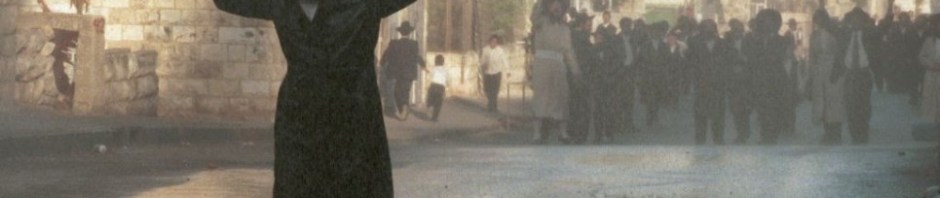
From the commander’s window on the second floor of Jerusalem police headquarters, vans full of arrested Haredim could be seen driving into the courtyard. Ranks of police reinforcements, wearied by weeks of intermittent skirmishing, were getting their final briefing before moving off again to Mea Shearim, where they would be sent into action behind water cannon. The commander, however, was not looking out. He had seen the scene often enough as the city’s ultra-Orthodox community regularly erupted into violence.
The growing militancy of the city’s ultra-Orthodox had culminated in 1972 with acts of arson against a sex shop in downtown Jerusalem and other targets, as well as the desecration of the graves of Zionist leaders — including the grave of Theodor Herzl, visionary of the Jewish state. The Hebrew word keshet (rainbow) had been painted at the site of these attacks, indicating that a single organization was behind them. Until now, the police had been dealing with a known quantity — a population responding to leaders whose calls for demonstrations were openly made in public speeches and wall posters. Now the police found themselves up against a secret organization whose strength, objectives, and ultimate level of violence was unclear. Would they stop with arson? Anything was conceivable…..
 ArchitectGuy on Israel